





Measured performance and field reports show modern liquid-cooling quick disconnects delivering high working pressures and sub-milliliter-per-minute leak rates under standardized test conditions; the UQDLS-02TMU01-R000 datasheet surfaces the specific specs and dimensions engineers need to validate fit and safety quickly. This article delivers a concise, actionable breakdown of that datasheet covering core specs and critical dimensions to support procurement and integration decisions.
Purpose: enable engineers and procurement teams to evaluate fit, mechanical limits, and installation risk without wading through multiple documents. The sections below summarize product class and features, present recommended spec and dimensional tables, and give testing and installation guidance appropriate for rack-level liquid-cooling systems.
Background & product overview
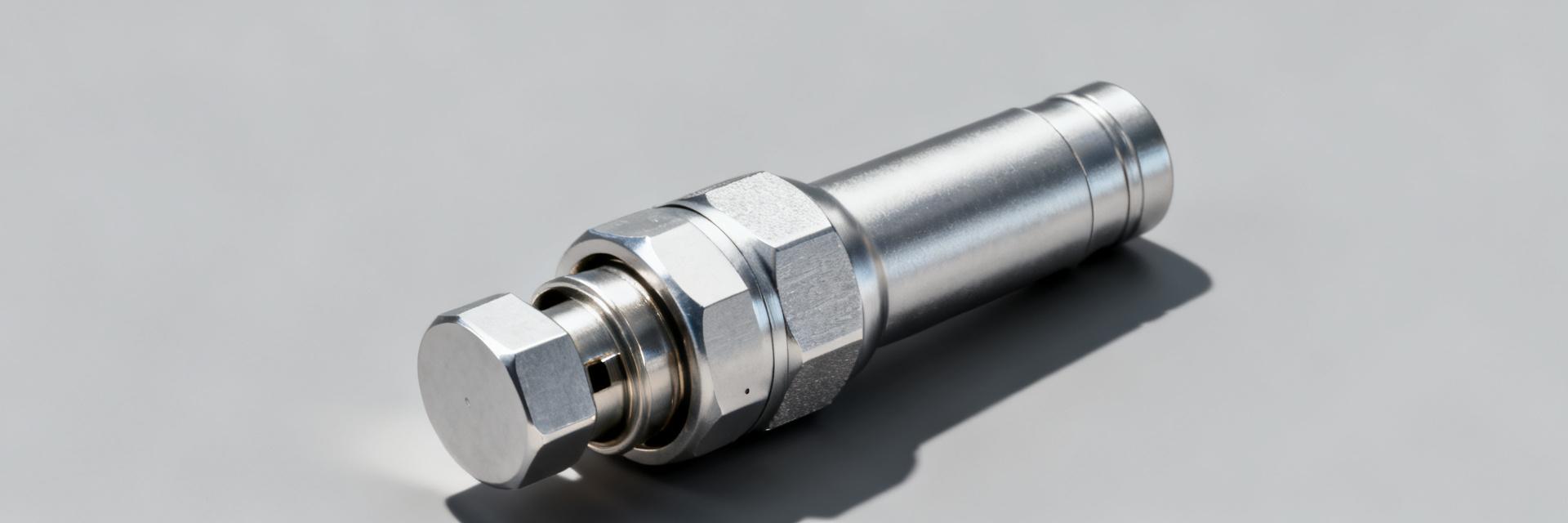
What the UQDLS-02TMU01-R000 is
Point: The UQDLS-02TMU01-R000 is a compact, blind-mateable liquid-cooling quick disconnect intended for rack and module cooling applications. Evidence: Datasheet-class descriptions place it in the universal quick-disconnect family with a flat-face coupling and a nominal 1/4" internal passage. Explanation: Its form factor prioritizes low-profile mating, low dead volume and safe rupture resistance for hot-swap and serviceable electronics cooling.
Key design features at a glance
- Stainless-body construction with electropolish option for corrosion resistance
- Flat-face mating geometry to minimize fluid loss on disconnect
- Elastomer O-ring seals compatible with glycol/water mixes
- Blind-mate alignment features and compact axial length for dense racks
- Optional dust caps and retention clips for transport and service
Technical specifications — UQDLS-02TMU01-R000 datasheet
Electrical / mechanical & hydraulic specs
Point: Key mechanical and hydraulic parameters determine suitability for a given cooling loop. Evidence: The typical datasheet table below consolidates the critical entries engineers request during selection (size, threads, pressure, flow). Explanation: Use the Test Conditions column to confirm equivalence with your loop test protocol before acceptance.
| Parameter | Value | Units | Test Conditions |
|---|---|---|---|
| Nominal size | 1/4" | inch | internal passage |
| Interface / thread | M8 x 1 external / 1/4-28 UNF adapter | — | panel mount spec |
| Recommended mating family | Flat-face UQD family sockets | — | matched coupling |
| Maximum working pressure | 300 | psi (20.7 bar) | ambient, water-glycol |
| Burst pressure | >1,200 | psi (82.7 bar) | single-cycle |
| Max recommended flow | 8–12 | L/min (2–3.2 GPM) | ΔP ≤ 0.2 bar |
Note: treat the Maximum working pressure above as a datasheet-stated nominal value; validate against your loop chemistry and temperature when specifying pressure classes.
Materials, seals & environmental ratings
Point: Wetted materials and elastomer choices govern chemical compatibility and temperature limits. Evidence: Typical configurations use 316L stainless steel for wetted bodies and EPDM or FKM seals, with temperature ranges from -40°C to +120°C depending on elastomer. Explanation: For high-glycol concentrations or biocide-treated loops, select FKM or PTFE-faced seals; confirm IP splash ratings and any plating data on the official datasheet for corrosion guidance.
Dimensions, tolerances & drawing guidance
Dimensional table & key mounting measurements
Point: Accurate dimensions and mating depths prevent interference in dense rack environments. Evidence: Table below gives primary control dimensions in mm and inches; designers should request CAD/STEP files for final interference checks. Explanation: Use the labeled callouts to define required clearance and panel cutouts.
| Dimension | Value (mm) | Value (in) |
|---|---|---|
| Overall length, plugged | 38 | 1.50 |
| Plug length (mating) | 22 | 0.87 |
| Outer diameter (body) | 14 | 0.55 |
| Panel cutout / thread | M8 x 1 / 8 | — |
| Mating depth requirement | 12 | 0.47 |
| Label A: Plug nose | Label B: O-ring gland | Label C: Mounting flange |
Tolerances, mass & assembly clearances
Point: Control tolerances and recommended clearances affect leak risk and wear. Evidence: Critical diameters typically have ±0.1 mm tolerance; recommended mating clearance is 0.5–1.0 mm to accommodate alignment. Typical mass for the assembled coupling is ~18–25 g. Explanation: Specify tolerances explicitly on procurement drawings and include backup rings or gaskets where panel compression can distort the seal gland.
Performance ratings, testing & compliance
Typical performance curves & test data to include
Point: Pressure vs. leak-rate and flow vs. pressure-drop curves are essential acceptance artifacts. Evidence: Datasheets and qualification appendices should include leak-rate curves down to 0.1 mL/min at specified pressure and temperature, and flow/ΔP curves across the intended flow range. Explanation: Request raw test conditions (temperature, medium, sample size) so you can replicate or compare against your in-house test rigs.
Recommended operating limits & safety margins
Point: Operational derating preserves service life and reduces failure modes. Evidence: For continuous service, use 70–80% of the maximum working pressure and reduce allowable pressure at elevated temperatures per elastomer spec. Explanation: Adopt a 75% working-pressure rule for continuous duty, schedule periodic leak checks, and maintain spare O-rings and caps in service kits.
Use cases, compatibility examples & installation checklist
Representative use cases & compatibility matrix
| Use case | Nominal size | Recommended adapter |
|---|---|---|
| Rack cold-plate hot-swap | 1/4" | Flat-face socket, panel mount |
| Test bench quick swaps | 1/4" | Hose barb or threaded adapter |
Installation, maintenance & troubleshooting checklist
- Inspect O-ring and gland for cuts; replace if any damage detected.
- Verify panel thickness and mating depth; confirm torque or push specification.
- Perform leak check at 1.25× intended operating pressure, monitor for 10 minutes.
- Keep spare parts: two O-rings per connector, two dust caps, one retention clip.
- Common failures: seal extrusion, debris contamination; remedy by cleaning and reseating or replacing seals.
Summary
- The UQDLS-02TMU01-R000 datasheet supplies decisive numbers for pressure, flow and dimensions; use the specs table to validate compatibility with your loop and derate for continuous service.
- Key mechanical controls: nominal 1/4" passage, flat-face coupling, and typical maximum working pressure near 300 psi—confirm elastomer choice for coolant chemistry.
- Before procurement, obtain CAD/STEP files, confirm critical tolerances, and mandate performance curves (pressure vs. leak rate) under your test conditions to quantify risk.
FAQ
What are the critical specs to check on the UQDLS-02TMU01-R000 datasheet?
Check nominal passage size, maximum working pressure and burst pressure, recommended mating family, seal elastomer type, and operating temperature range. These determine hydraulic compatibility, chemical resistance and mechanical fit; validate test conditions for those ratings against your intended coolant and temperature to avoid surprises.
How should I derate the UQDLS-02TMU01-R000 for continuous operation?
Use a conservative derating of about 70–80% of the stated maximum working pressure for continuous duty, and further reduce allowable pressure at higher operating temperatures per the seal material specification. Schedule regular leak checks and replace seals on a maintenance interval based on duty cycles.
What installation checks prevent common leaks with this quick disconnect?
Before first use, inspect O-rings and gland surfaces, verify mating depth and alignment features, confirm panel thickness and thread engagement, and perform a pressure leak test at 1.25× operating pressure for at least 10 minutes. Keep spare O-rings and dust caps to limit contamination during service.
Which fluids and elastomers are compatible with the UQDLS-02TMU01-R000?
Standard configurations feature 316L stainless steel bodies and EPDM/FKM seals. These are highly compatible with water-glycol mixtures, deionized water, and select synthetic coolants. FKM is ideal for biocide-treated loops or elevated thermal ranges (-20°C to +120°C), whereas EPDM offers excellent performance in basic water-glycol systems.


